
Galatians 2:14 – Correcting Conduct that Contradicts the Gospel

Today’s Reading: Isaiah 19:1‐21:17, Galatians 2:1‐16, Psalm 59:1‐17, Proverbs 23:13‐14

Context: When Peter camp to Antioch, Paul “opposed him to his face,” because he separated himself from the Gentiles while they ate when other Jews were present.

Galatians 2:14 – But when I saw that their conduct was not in step with the truth of the gospel, I said to Cephas (Peter) before them all, “If you, though a Jew, live like a Gentile and not like a Jew, how can you force the Gentiles to live like Jews?”

Observations:

  • When Paul saw that their conduct was not in step with the truth of the gospel
  • He said…

Apply: I need to be ready to speak truth when I see Christians whose conduct is not in step with the truth of the gospel.  In addition, I must pursue other Christians who will speak truth to me when they see my conduct contradict the gospel.

Do you have Pauls in your life who will tell you when your conduct is not in line with the truth of the gospel?

Isaiah 17:10 – Remember the Rock of Refuge

Today’s Reading: Isaiah 15:1‐18:7, Galatians 1:1‐24, Psalm 58:1‐11, Proverbs 23:12

Context: Isaiah is prophesying the desolation of Damascus.

Isaiah 17:10-11 – For you have forgotten the God of your salvation
 and have not remembered the Rock of your refuge;
therefore, though you plant pleasant plants… the harvest will flee away
 in a day of grief and incurable pain.

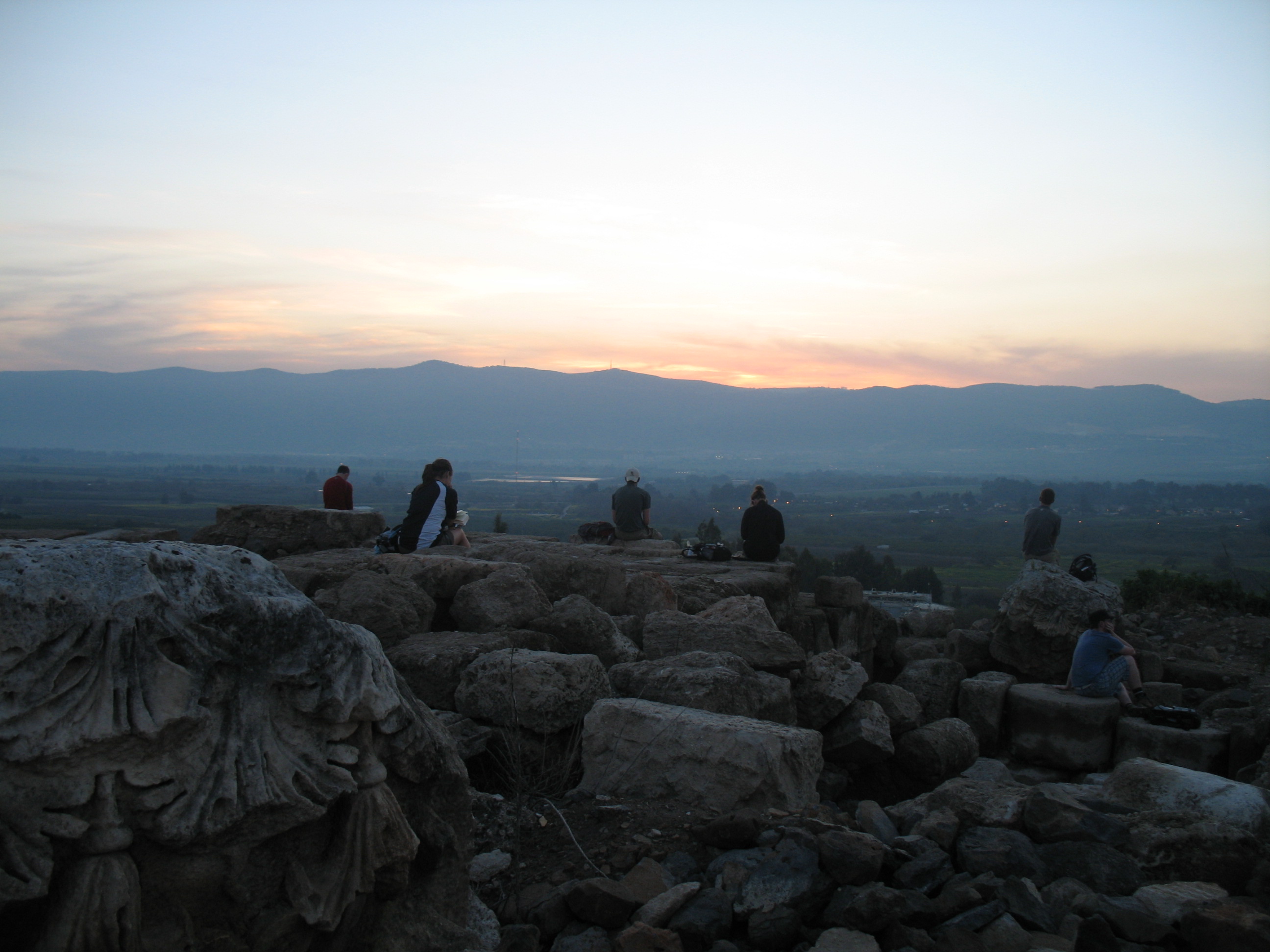
Ruins on the Road to Damascus

Observations:

  • Desolation will come because:
    • You have forgotten the God of your salvation
    • You have not remembered the Rock of your refuge (italics added)
  • Though you plant pleasant plants
    • The harvest will flee away in a day of grief and incurable pain

If we forget God, our work will be futile and painful.

Apply: I want to repeat the three Rs from this verse in prayer throughout today – Remember the Rock of Refuge. 

How can remembering God change the outcome of your life?

2 Corinthians 13:11 – Closing Thoughts to Corinth

Today’s Reading: Isaiah 12:1‐14:32, 2 Corinthians 13:1‐14, Psalm 57:1‐11, Proverbs 23:9‐11

Context: Ending the letter, Paul urges obedience to demonstrate true faith and then gives this charge.

2 Corinthians 13:11 – Finally, brothers, rejoice. Aim for restoration, comfort one another, agree with one another, live in peace; and the God of love and peace will be with you.

Observations:

  • Rejoice
  • Aim for restoration
  • Comfort one another
  • Agree with one another
  • Live in peace
    • And the God of love and peace will be with you.

What a cool benediction for a community of believers.  I want to write this verse on the walls of our new men’s dorm.

Apply:  As I live today, I want to be defined by the first instruction – rejoice.  Specifically, as my wife and daughter wake this morning, I want to great them with joy.

Which one of these instructions do you need to apply to your life today?

2 Corinthians 12:14-15 – Spend and Be Spent for Souls

Today’s Reading: Isaiah 10:1‐11:16, 2 Corinthians 12:11‐21, Psalm 56:1‐13, Proverbs 23:6‐8

Context: Paul is expressing concern that the Corinthian church is not responding to his message favorably.  He is afraid that the church in Corinth thinks he has a selfish motive in his ministry.

1 Corinthians 12:14-15 – Here for the third time I am ready to come to you.  And I will not be a burden, for I seek not what is yours but you.  For children are not obligated to save up for their parents, but parents for their children.  I will most gladly spend and be spent for your souls.  If I love you more, am I to be loved less?

Observations:

  • I will not be a burden
  • I seek not what is yours but you (I LOVE THIS)
  • Illustration: Children are not obligated to save up for their parents, but parents for their children
  • I will most gladly spend and be spent for your souls

Apply:  “Father, give me Paul’s heart for the people I minister to.  I want to fully say: ‘I seek not what is yours but you.  I will most gladly spend and be spent for your souls.’”

The Proverbs in our reading today apply directly to this passage.  Read Proverbs 23:6-8.  Are you glad to spend and be spent for the souls of others?

Isaiah 6:6-7 – Is your sin atoned for?

Today’s Reading: Isaiah 6:1‐7:25, 2 Corinthians 11:16‐33, Psalm 54:1‐7, Proverbs 23:1‐3

Context: Isaiah’s vision and call in chapter 6 is one of the most familiar and powerful passages in the prophetic texts.  After seeing the Lord on his throne Isaiah responds with “woe is me…” 

Isaiah 6:6-7 – Then one of the seraphim flew to me, having in his hand a burning coal that he had taken with tongs from the altar.  And he touched my mouth and said: “Behold, this has touched your lips; your guilt is taken away, and your sin atoned for.”

Observations:

  • The seraphim came to Isaiah and touched him – Grace
  • The coal touched his lips
  • Your guilt (blame or punishment) is taken away
  • Your sin atoned for (covered over or forgiven)

After the symbolic cleansing through the coal in these verses, Isaiah responds to God completely differently with “Here am I!  Send me.”

Apply:  I want to remember and speak of the saving work he has done in my life by grace through faith in Christ.  I want to respond with readiness – “Here am I!  Send me.”

If you have placed your faith in Jesus as Savior and Lord, do you remember a clear “woe is me” before and a “here am I; send me,” experience after?  If you aren’t fully aware of what Christ has done for you and are not sure that your sin is atoned for, please email me or visit this link.

Psalm 53:4 – Do prayer and service define you?

Today’s Reading: Isaiah 3:1‐5:30, 2 Corinthians 11:1‐15, Psalm 53:1‐6, Proverbs 22:28‐29

Context: David is talking about the fool who says in his heart there is no God.  He elaborates and states that God looks down from heaven and sees that there is no one who does good (Paul quotes this Psalm in Romans 3).

Psalm 53:4 Have those who work evil no knowledge,
 who eat up my people as they eat bread,
 and do not call upon God?

Observations:

  • Those who work evil eat up people – use others and instead of serving them
  • Those who work evil do not call upon God – independent of God instead of dependent on God

Application:  I don’t want anyone to be able to accuse me of these two traits.  As I ran this morning, I talked with God about my desire to see prayer and sacrificial service define my life.

What do you need to do to prioritize prayer and service?

2 Corinthians 10:4 – Powerful Weapons

Today’s Reading: Isaiah 1:1‐2:22, 2 Corinthians 10:1‐18, Psalm 52:1‐9, Proverbs 22:26‐27

2 Corinthians 10:4 – For the weapons of our warfare are not of the flesh but have divine power to destroy strongholds.

Context: Paul is defending his ministry.  He wants the church in Corinth to understand that he is doing the work of God and is not working for selfish gain.

Observations:

  • The weapons of our warfare – the tools we use in our fight
  • Are not of the flesh – carnal or material
  • But have divine power –mighty strength from God
  • To destroy strongholds – tear down fortresses

Apply: I must minister with confidence in the weapons God has given me to destroy strongholds.

How should an awareness of the supernatural tools you have affect your walk?

Psalm 51:17 – Are you broken hearted?

Today’s Reading: Song of Solomon 5:1‐8:14, 2 Corinthians 9:1‐15, Psalm 51:1‐19, Proverbs 22:24‐25

Psalms 51:17 – The sacrifices of God are a broken spirit;
 a broken and contrite heart, O God, you will not despise.

Context: David’s psalm of confession after Bathsheba.  He pleads for mercy, forgiveness, cleansing and restoration of joy.

Observations:

  • The sacrifices of God are:
    • A broken (shabar – to break to pieces) spirit
    • A broken and contrite (dakah – crushed) heart
    • God will not despise – distain, or look with contempt on

David exemplifies what a broken spirit and a contrite heart look like in Psalms 51. 

Apply: I want to spend today (and my life) broken and contrite before God.  Specifically, I will get on my knees and pray the words of David in Psalm 51 over my life.

How does the gospel encourage true brokenness?

Song of Solomon 4:9 – Does your bride have your heart?

Today’s Reading: Song of Solomon 1:1‐4:16, 2 Corinthians 8:16‐24, Psalm 50:1‐23, Proverbs 22:22‐23

Song of Solomon 4:9 You have captivated my heart, my sister, my bride;
 you have captivated my heart with one glance of your eyes,
 with one jewel of your necklace.

Context: Solomon is admiring his bride’s beauty.  Several years ago someone shared this picture with me:

What Solomon's wife looked like...

Observations:

  • You have captivated my heart (2x)
    • My sister, my bride
      • With one glance of your eyes
      • With one jewel of your necklace

I find my wife beautiful.  Song of Solomon reminds me that I am a Rebecca man – NOT a short, dark haired, brunette, big smile, etc man.  I like her attributes because she has captivated my heart, not the other way around.  The discipline of romantic love is declaring to her and myself that she has captivated my heart.

Apply:  I need to regularly tell Rebecca that she has captivated my heart.

How can you effectively communicate to your spouse that he or she has your heart?

2 Corinthians 8:4 – Are you begging to give?

Today’s Reading: Ecclesiastes 10:1‐12:14, 2 Corinthians 8:1‐15, Psalm 49:1‐20, Proverbs 22:20‐21

2 Corinthians 8:4 – …begging us earnestly for the favor of taking part in the relief of the saints

Context: Paul is sharing how the church in Macedonia overflowed with generosity and gave financially beyond their means to the ministry of the gospel.

Observations:

  • They were begging earnestly for the opportunity to give
  • For the favor (charis – grace or thanks) of taking part in the relief of the saints

I have had times in my life where giving was an overflow of worship and thanks to God.  Yet, I don’t remember ever begging someone earnestly to let me give to the gospel ministry through them.

Apply:  I want to pray for this kind of heart.  Not just willingly, but earnestly pursuing opportunities to give financially to the spread of the gospel. 

What motivates this kind of generosity?